

[ad_1]
Lebanon’s banks have been lauded as the jewel in the country’s economy for decades.
By the middle of 2019 their combined assets had increased 83 per cent in eight years to $253bn, equal to roughly five times the country’s economic output. In Beirut, branches boasted sparkling glass facades and fancy atriums, and bankers entertained clients with cigars and fine dining in the city’s smartest restaurants.
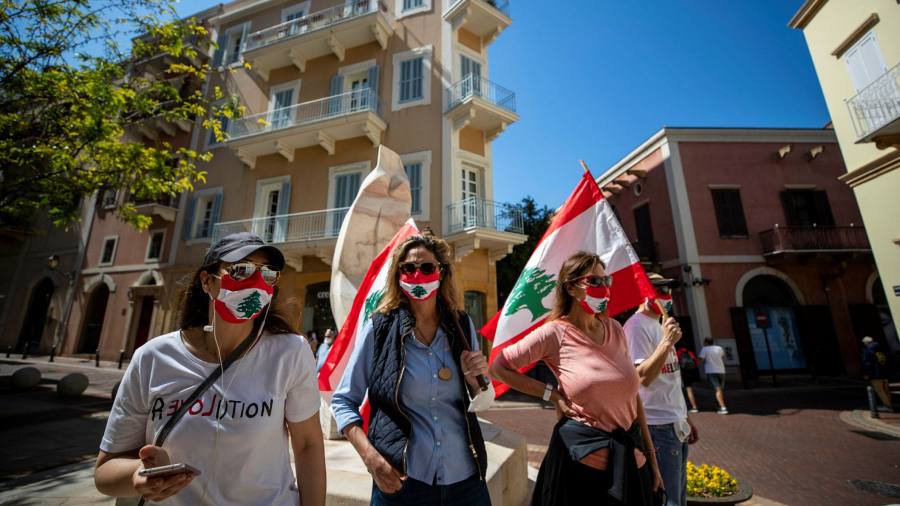
Now, less than a year later, branches are barricaded with thick metal plates to protect them from protesters’ firebombs, and those same executives are anxious not to be seen in public. Last month fires were started outside the central bank’s office in the northern city of Tripoli, while across Beirut “down with the rule of the bank” is sprayed on walls.
An economic, fiscal and monetary crisis has accelerated in Lebanon since March, when the government defaulted on $90bn in US dollar-denominated debt. Month-on-month inflation surged to 56.5 per cent in May, poverty and unemployment are soaring, and many Lebanese believe the country’s bankers — and its politicians — are to blame.
“[The banks] made so much money along the way they are entirely partners in [the crisis]”, said Jad Chaaban, a Lebanese economist. “They are villains as much as the ruling thugs and the [political] parties who stole money and killed people.”
Lebanon depends on imports and for years the central bank has helped to finance the trade deficit by offering high interest rates — sometimes more than 10 per cent a year — on dollar deposits from commercial lenders. The banks, in turn, passed those generous rates to their clients, helping to attract foreign currency from local depositors and the large Lebanese diaspora abroad.
The system has helped Lebanese banks generate impressive profits. But last summer fragile investor confidence waned, the flow of dollars began to dry up and the system started to break down. Mass protests began in October, stoked by frustration with stark inequality, and eventually toppled the government.


Banks closed for weeks during the demonstrations and customers panicked about retrieving their money. Lenders, anxious to prevent a bank run, imposed limits on withdrawals and the flow of dollars into the country’s commercial banks reversed. According to research firm Oxford Economics, as much as $25bn — 10 per cent of sector’s combined assets — left the banking system in 2019.
After the state defaulted in March, the position of Lebanon’s…
[ad_2]
Read More: Lebanon’s once-lauded bankers under fire as economic crisis deepens