

[ad_1]
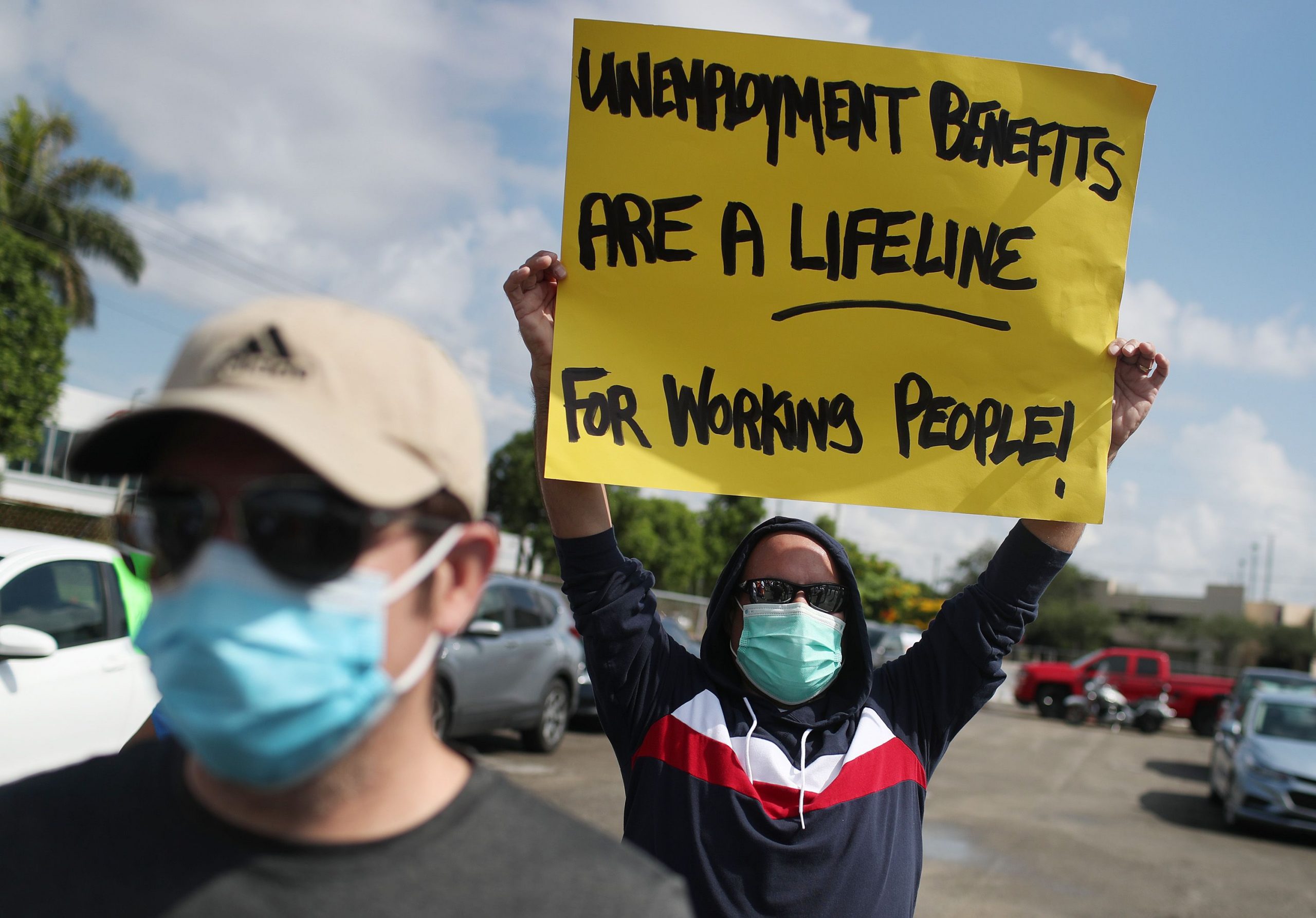
Steven Berr, jobless since March, is dreading what the end of July will bring: His income will drop to just a quarter of what it is now when critical unemployment aid from the government runs out.
“We’re talking about $900 a month. Nobody can survive on that,” Berr, 57, said. “My rent is $2,200. After August, paying my bills and my rent will be almost impossible.”
millions of unemployed Americans who rely on the additional $600 in weekly unemployment benefits provided under the CARES Act. The relief is set to expire on July 31, and without that support, many Americans will see their incomes plummet by half or more, making it increasingly difficult to pay their bills, according to a new analysis.” data-reactid=”18″Berr is among the millions of unemployed Americans who rely on the additional $600 in weekly unemployment benefits provided under the CARES Act. The relief is set to expire on July 31, and without that support, many Americans will see their incomes plummet by half or more, making it increasingly difficult to pay their bills, according to a new analysis.
“Imagine waking up and making half to a quarter of what you made the day before,” said Ernie Tedeschi, a managing director and policy economist for Evercore ISI. “That’s what unemployed workers are facing on July 31.”

Unemployed Americans may see a drop in their unemployment benefits between 52% to 72%, according to an analysis by Evercore ISI. Graphic: David Foster / Yahoo Finance
The median decrease in unemployment benefits after the expiration would range from 52% to 72%, according to an analysis by Evercore ISI provided to Yahoo Money. Those unemployment benefits are often the only source of income for jobless Americans, leading to a huge hit on their incomes, Tedeschi said.
“It’s like a self-inflicted recession,” he said. “You would have to look at recessions to see drops in income that sharp, happening so fast.”
Unemployed Americans in Arizona, Louisiana and Mississippi will experience the largest reductions in benefits with median declines of 71%, 71%, and 72%, respectively. Those also happen to be states where coronavirus cases have been growing in the last few weeks.
“We have it entirely backwards now,” Tedeschi said. “The point of this emergency unemployment insurance was to keep families whole at a time when there was this external threat to the economy, namely the virus. And if the virus is re-surging, then that should be a reason to extend unemployment.”
[ad_2]
Read More: Jobless Americans could see their income drop by half — or more — if