

[ad_1]
Text size
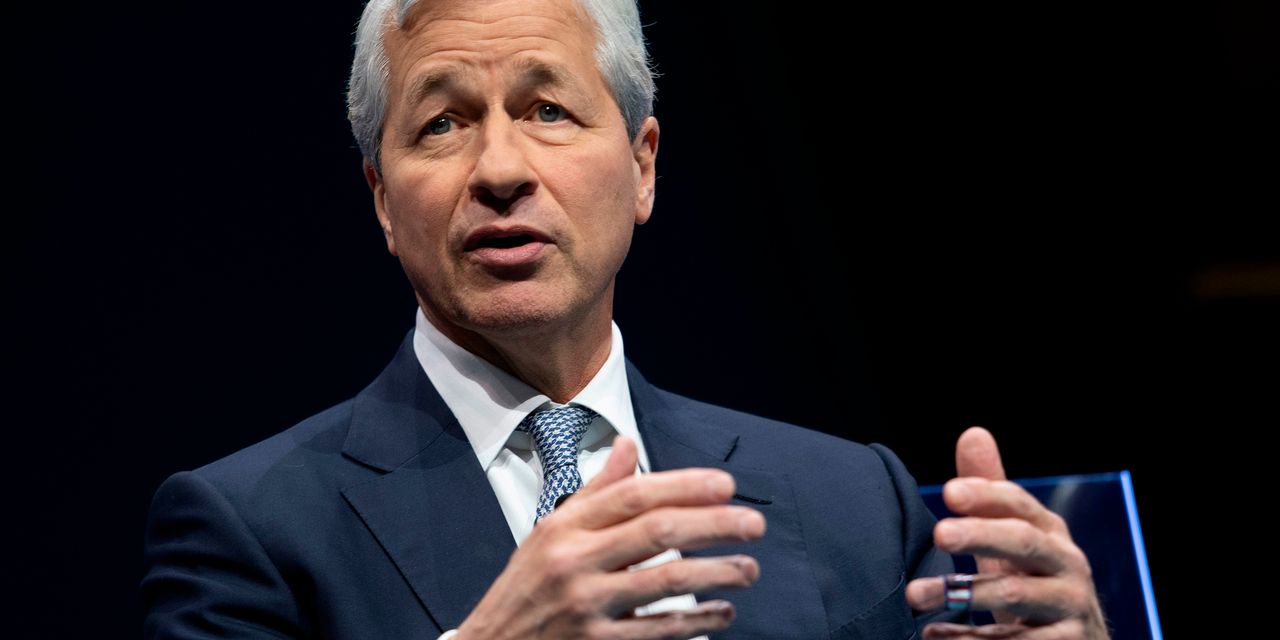
JPMorgan Chase CEO Jamie Dimon.
Jim Watson/AFP/Getty Images
If there were any doubt that these are some of the best of times and the worst of times for investors, this past week’s raft of bank earnings reports should have put them to rest. As with so many other things, that can be traced to the coronavirus crisis and the policy response to it.
Those institutions with big trading and investment-banking operations, such as
JPMorgan Chase
(ticker: JPM),
Goldman Sachs Group
(GS),
Morgan Stanley
(MS), and
Citigroup
(C), enjoyed massive revenue gains. That could largely be traced to the Federal Reserve’s aggressive response to the financial markets’ near-meltdown in March, including slashing interest rates to almost zero, buying Treasury and agency mortgage-backed securities to pump trillions into the economy, and taking the unprecedented step of backstopping corporate credit markets. The
S&P 500 index’s
resulting 40% recovery from its lows and the record issuance of investment-grade debt securities were reflected in their results.
The worst might lie ahead, however, as the six biggest banks—
U.S. Bancorp
(USB),
Wells Fargo
(WFC), and the aforementioned four—added some $36 billion to their reserves for future loan losses. “This is not a normal recession,” JPMorgan Chase CEO Jamie Dimon commented on the bank’s earnings call. “The recessionary part of this you’re going to see down the road.”
So far, that hit appears to have been deferred by the federal government’s fiscal actions, notably the $3 trillion Cares Act that provided up to $1,200 to middle- and lower-income taxpayers, plus $600 a week to enhance state unemployment insurance benefits. Those moves helped fuel a rebound in retail sales, including the better-than-expected 7.5% gain in June reported this past week, on top of an upwardly revised 18.2% surge in May.
That’s history, however. Unemployment remains high, with the latest week’s jobless claims remaining at 1.3 million and the preceding week’s continuing claims at 17.3 million. Sustaining spending depends on government payments; the enhanced jobless benefits are scheduled to end on July 31.
Congress is due to return this week to put together another stimulus bill, which Greg Valliere, chief U.S. strategist at
AGF Investments,
expects will spark a bruising debate. “Every…
[ad_2]
Read More: Banks’ Loan-Loss Reserves Send Sharp Warning on Economy