
[ad_1]
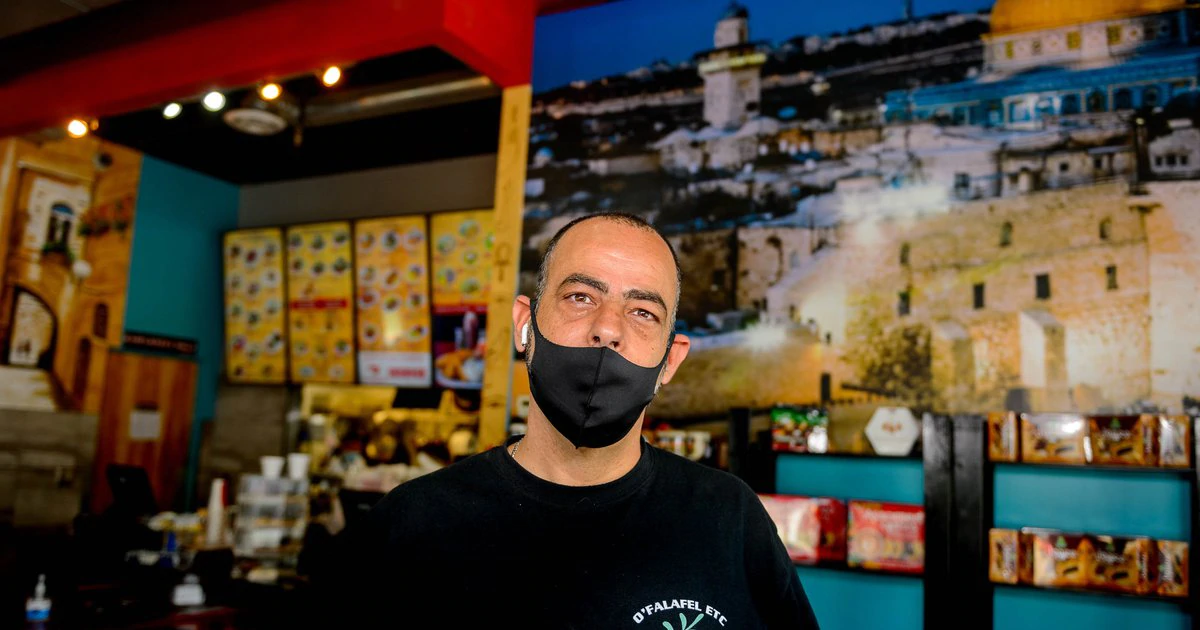
When he signed on with Grubhub and Uber Eats, Osama Khader didn’t despise the 30% commission he paid to the online food ordering and delivery platforms.
“The technology service offered some marketing, which increased sales a bit,” Khader said, “and it was cheaper than hiring my own drivers and paying liability insurance.”
When the coronavirus struck, however, and all dine-in service ceased for a time, his feelings quickly shifted. Delivery mushroomed to more than 50% of all transactions, while the volume of fees escalated and threatened to bankrupt his business.
The fees “do a lot of work for you,” said Khader, who has a degree in finance from the University of Utah. If left unchecked, though, “they are a double-edged sword that can kill you.”
Khader is one of many Utah restaurant and bar owners who want Gov. Gary Herbert and the Legislature to step in and police the industry.
“It needs to be regulated,” Khader said, “so they don’t play games with us.”
/cloudfront-us-east-1.images.arcpublishing.com/sltrib/U6RD6FKVMVBOZNTN4N3IY6FWTU.jpg)
In Utah, capping delivery fees is one of six items on a food industry petition launched last week.
The Save Utah Bars initiative — which has about 6,000 signatures — is focused mostly on making changes to liquor laws to help boost business profits during the pandemic. Allowing sealed to-go cocktails and letting businesses pay wholesale prices for liquor are two of the items being requested.
But third-party delivery fees have become a such a threat to the bottom line it was included on the petition.
Currently four companies dominate the online ordering and delivery landscape — Grubhub, DoorDash, Uber Eats and Postmates.
The companies take a percentage — the average is about 30% — of every online order their mobile application directs to the restaurant. Those charges are steep, because most restaurants operate on razor-thin profit margins of between 3% and 9%.
DoorDash eliminated or reduced some commission fees between mid-March and the end of April, when states across the country mandated the closure of dining rooms. Grubhub also temporarily suspended up to $100 million in commission fees for independent restaurants.
But those commissions are now back in effect, and restaurants are struggling to pay.
Why delivery firms fight caps
/cloudfront-us-east-1.images.arcpublishing.com/sltrib/62DAL6UBYBG4VK3XDBEEI3AR5A.JPG)
The delivery companies have balked at fee caps, saying their platforms provide needed services to business owners — most of whom don’t have the time or computer know-how to create such systems.
“Any arbitrary cap… will lower order volume to locally owned…
[ad_2]
Read More: Delivery fees: The double-edged sword that is slashing into Utah