

[ad_1]
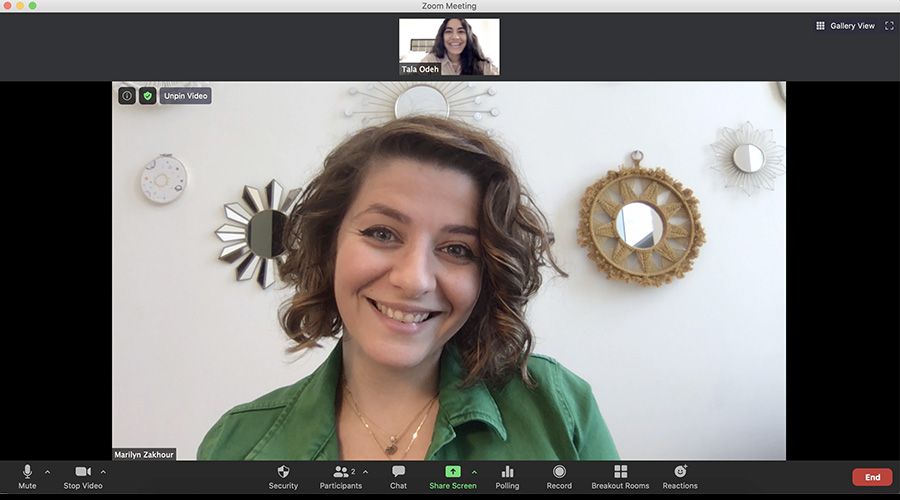
Marilyn Zakhour, founder and chief executive officer of UAE-based Cosmic Centaurs
At the height of the pandemic, I started a company called Cosmic Centaurs to help organisations and individuals adapt to the new realities of work and education. We spend a lot of time studying the impact of the profound changes to the workplace that were accelerated by the global pandemic. We frequently discuss the rapid rate of digital transformation, collaboration and remote work, the need to continuously retrain and upskill teams as well as how humans can use technology to enhance their lives.
During one of these conversations it occurred to me that my grandmother, Jamal, had been a remote worker in the early 1990s. Originally a stay-at-home mum, she decided that she needed to find a way to financially contribute when my family emigrated to Canada. So, Jamal became a seamstress, turning precut fabric into garments each week. I vividly remember massive shipments of bright yellow GAP sweaters arriving to our home and I am fairly certain she had no idea who she was producing for, save for the name on the label which she carefully sewed inside each garment. Someone in a warehouse somewhere would control the number of items that were up to standard, and my grandmother would get paid by the unit.
Undoubtedly, the retailer probably didn’t know of my grandmother’s existence. She never received a welcome email or took part in a company town hall. “Company Culture” was a foreign concept, the only thing she knew was “control”.
The pandemic has brought the collective realisation that remote work can be hyper productive. Companies that had once completely rejected the idea have suddenly become vocal advocates.
Increasingly, more of us will be asked to work from home, hired into companies without ever visiting their offices, or meeting our colleagues in person. Our work will be divided into small, precise, bite-sized, series of inputs and outputs. We will be judged solely on the quality of our outputs, much like my grandmother and her yellow sweaters.
In that world, people whose contribution is more intangible may find it harder to demonstrate their value. Doers may be favoured over dreamers.
When efficiency becomes the strategy, where do culture and brand fit?
On the bright side, examples of successful and happy remote-only companies do exist. Companies like Git-Lab, Zapier and Automattic (the company behind WordPress) have been location-independent since inception.
These companies offer appealing benefits such as unlimited vacation days, home office or co-working space allowances, flexible work hours and more. They are actively focused on promoting diversity and learning and are generally quite successful companies. By way of example, in September 2019, GitLab was valued at $2.7 billion ahead of an initial public offering (IPO)…
[ad_2]
Read More: In a world of remote work, will control replace culture?