

[ad_1]
Located below the Eastern Express Highway, this storied enclave is everything that most of Mumbai is not: idyllic, languid, and devoid of the city’s signature traffic.
“Living here has given me a sense of belonging,” says the 30-year-old marketing executive.
Bana lives in Dadar Parsi Colony, one of 25 colonies in Mumbai that officials designed solely for Parsis, an ethnoreligious group of Persian descendants in India who follow the Zoroastrian religion.
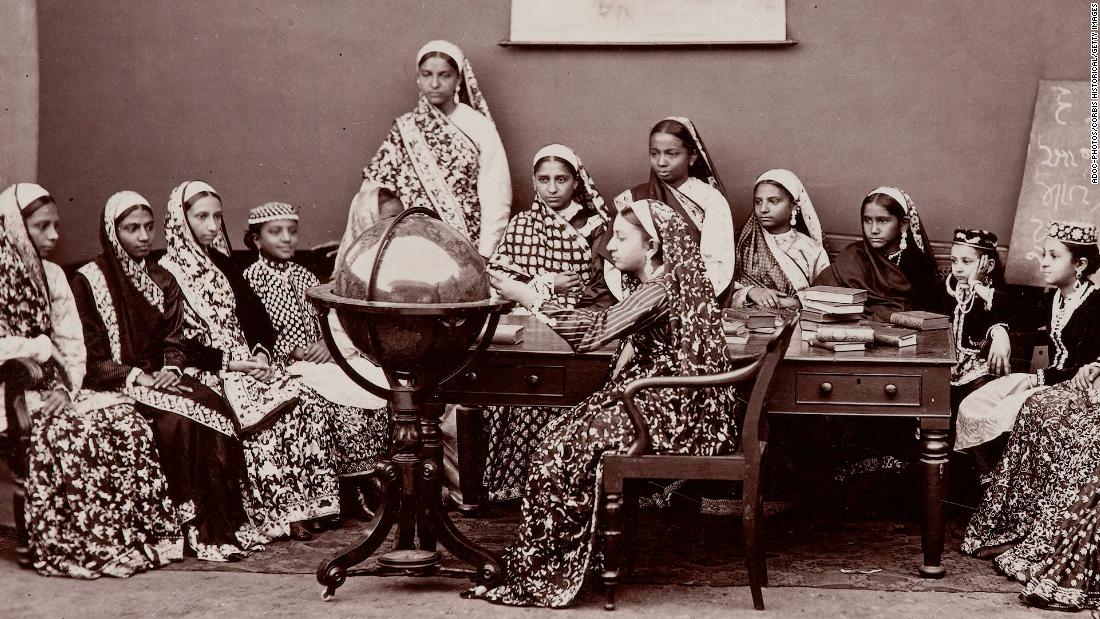
The Zoroastrians, whose doctrines influenced the principles of Judaism and Christianity, fled from Persia — modern-day Iran — to India in the 7th century to avoid political and religious persecution. Over centuries, a thriving community of bankers, industrialists, traders and engineers grew along India’s west coast.
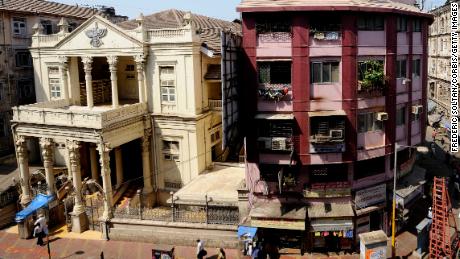
As numbers dwindle and the community fights to sustain itself, progressives want to widen the remit for new members. But they face strong resistance from more orthodox Parsis, who believe any dilution of their faith is sacrilegious.
Inside the enclave
Dadar Parsi Colony was established in the mid-1890s after the bubonic plague tore through Bombay, as Mumbai was then known, claiming thousands of lives.
At the time, the city was home to about 800,000 people, and the illness quickly spread through crowded slums. To ease congestion, the city’s British colonial leaders expanded Bombay’s limits to Dadar, then a low-lying marshland.
Visionary engineer Mancherji Edulji Joshi persuaded British authorities to set aside plots for lower middle-class Parsis, and drew up a blueprint of a model neighborhood, detailed to the type of flowers and trees to be planted on the streets. Joshi was given a 999-year lease for 103 plots.
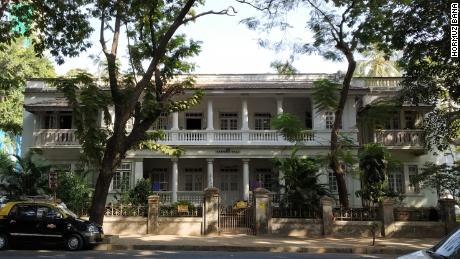
In Dadar, the colony’s leafy streets were laid out in a grid formation, lined by low-rise Victorian apartment blocks.
“He had a rule that no building should be more than two stories high,” says Joshi’s granddaughter, Zarine Engineer. “Before a single house was constructed, he planted the streets with trees, each street with a different kind.”
Jam-e-Jamshed Road — named after the prominent Parsi newspaper — still has rows of ashoka trees. Firdausi Road, named after the Persian poet Firdawsi, is dappled with mahogany.
There is a library, a function hall, sports grounds, a seminary, a school, and a temple. The buildings are named after their proprietors: Dina House, Readymoney House and Marker House. It was not uncommon for Parsis’ surnames to reflect their line of work.
[ad_2]
Read More: One of India’s richest minority groups enjoys some of Mumbai’s best rents.